South Sudan, the youngest nation in the world, is scheduled to hold its first general election on 22 December 2026. The civil war that engulfed the country after independence has derailed the country’s democratic process. The planned elections were intended under the 2018 peace framework to bring to an end the transitional period that began in 2018 after the signing of the Revitalized Agreement on the Resolution of the Conflict in the Republic of South Sudan (R-ARCSS).1 Since the confirmation of the elections, the National Elections Commission (NEC) has begun preparations by putting in place electoral structures and organizing civic education at the state level, while also undertaking internal institutional reforms.2 Policymakers and observers continue to ask whether the security, legal, and political environment is credible enough for citizens and political actors to participate and to accept the process and its outcome.
The growing uncertainty surrounding the general election stems from the weak implementation of the R-ARCSS, which set clear guidelines to be followed before any general elections. Fighting continues in many parts of the country, and the rule of law and justice mechanisms envisioned by R-ARCSS remain incomplete. The arrest and trial of former First Vice-President Riek Machar, who is also the leader of the Sudan People’s Liberation Movement-in-Opposition (SPLM-IO), is a serious concern as the election approaches.3 South Sudanese civil society organizations (CSOs) have long demanded that the state implement the R-ARCSS and hold elections, but under current circumstances, many CSOs fear electoral violence, which has also fueled distrust in political institutions and the political process.4
The political context in South Sudan took another turn on 22 September 2026, when President Salva Kiir dissolved the Revitalized Transitional Government of National Unity and relieved all Vice Presidents of their duties, including Machar. The national legislature, state governments, and state legislatures were all dissolved. The president has appointed a caretaker administration, which he is heading, to lead the country until the December elections.5 This followed amendments to the electoral framework which removed the permanent constitution and national population census as prerequisites for conducting national elections.6
This policy brief examines the South Sudanese aspiration to hold an election and the conditions needed for a credible, inclusive, and peaceful election. The brief asks what minimum political, legal, institutional, and security conditions must be in place for the upcoming December elections to be considered credible and peaceful. A recent visit to Juba while Machar’s trial was ongoing provides contextual grounding, while conversations with CSOs strengthen existing policy literature.
The 2018 Revitalized Peace Agreement did not envision general elections as a stand-alone event. Elections were meant to be the last phase of the transitional process, setting the foundation for post-conflict reconstruction in South Sudan. The R-ARCSS sought, among many things, to establish a unified security force, a permanent constitution, a functioning electoral system, and a transitional justice system. As such, the planned December 2026 general elections cannot be separated from the R-ARCSS.7
Implementation of the R-ARCSS has been very slow, and in 2022, the parties adopted a roadmap that extended the transitional period and moved the general elections to December 2024.8 Unfortunately, in September 2024, the transition was extended to February 2027, and the general elections moved to December 2026 because many critical tasks had remained unresolved. The parties justified each extension as additional time needed to complete reforms that will enable a credible transition.9
The debate over implementing R-ARCSS shows how far the original sequencing of activities has shifted. In recent years, the government has attempted to amend R-ARCSS to delink the permanent constitution and population census from the upcoming general elections. On 15 January 2026, the national Minister of Justice and Constitutional Affairs submitted proposed amendments to the Reconstituted Joint Monitoring and Evaluation Commission (RJMEC) for its consideration and endorsement, pursuant to Article 8.4 of the R-ARCSS. Four of these suggested amendments were substantive, namely: “Article 1.2.5 of the R-ARCSS on TCRSS to delink the Permanent Constitution from the conduct of elections and end the Transition; Article 1.2.14 of the R-ARCSS to repeal the conduct of Population and Housing Census; Article 8.210 of the R-ARCSS to delink the R-ARCSS from the Transitional Constitution of the Republic of South Sudan (TCRSS); and Article 8.3 of the R-ARCSS to repeal the Supremacy of the R-ARCSS”. RJMEC stated that “The first two proposals directly relate to the conduct of elections, based on the justifications provided. In contrast, the latter two are broader than just the electoral process and would alter the structure and architecture of the R-ARCSS, undermine the legal basis of the R-ARCSS, thereby abrogating its supremacy, including undermining the Intergovernmental Authority on Development’s (IGAD) and the African Union’s (AU) oversight role as the Guarantors”.11 RJMEC argued any amendments to the R-ARCSS should follow the procedure outlined in Article 8.4, and be limited to provisions strictly necessary for free, fair, peaceful, and credible elections.
The debate changed in September 2026 when the electoral framework was amended to remove the completion of the permanent constitution and national census as prerequisites for conducting national elections.12 This may remove legal and practical obstacles to conducting the election, but it also changes the sequencing envisioned by the peace agreement. The reconfiguration of the institutions through which the R-ARCSS power-sharing agreement had been operated has significantly changed the political context. Just a week before the dissolution, the regional body IGAD reaffirmed R-ARCSS as the “sole viable framework for peace,”13 and the December election remained anchored to the peace agreement. The question now is how the institutions established to monitor and implement the agreement will operate under the caretaker administration.
RJMEC has argued that some unfinished reforms can continue after the elections, while others are central to the validity and fairness of the electoral process, such as “security-sector unification, electoral rules, the political rights of parties, civic space and dispute-resolution”.14 Transitional justice remains incomplete because the Hybrid Court and the Compensation and Reparation Authority, which were supposed to be established, are still pending, even as the Commission for Truth, Reconciliation and Healing has made significant progress.15 The UN Commission on Human Rights in South Sudan continues to document serious human rights concerns, a hostile political atmosphere, the prosecution of political opposition, and armed violence.16 Accountability is critical to the wider transition process. A CSO representative who spoke on condition of anonymity stated that:
“Many of the clauses of the Revitalized Peace Agreement have not been implemented. This was supposed to be the basis for any general elections.”
Political actors and CSOs in South Sudan are not concerned that every aspect of the R-ARCSS has not been implemented before the general elections; rather, they are asking for clarity on which unfinished provisions are indispensable to a free, fair, and peaceful election and which can legitimately continue after the elections. When R-ARCSS was designed, the general elections were supposed to be the outcome of the transition. But under current circumstances, the risk is that holding general elections becomes a substitute for completing the transition rather than the culmination of it.
This concern has become immediate because of the dissolution of the transitional government. The critical question now is whether the new caretaker administration can oversee the elections in a way that all political parties and actors regard as sufficiently inclusive and legitimate.
Since the signing of the R-ARCSS in 2018, South Sudan has made little progress toward holding elections. The NEC was only reconstituted in 2024 and has since re-established State High Election Committees, developed policies and procedures, expanded engagement with political parties, civil society, the media and prospective observers, and trained more than 600 South Sudanese in election administration, half of them from civil society organizations.17 This administrative architecture is needed to manage the electoral process.
The NEC has a significant mandate under the legal framework. The National Elections Act, amended in 2023, gives the NEC responsibility for setting election dates, voter registration, nomination of candidates, recruitment and training of election staff, civic education for voters, and electoral dispute resolution. The law requires NEC, without prejudice and discrimination, to create a conducive atmosphere where citizens can exercise their political rights and express their will through a secret ballot.18
The NEC has stepped up preparations by publishing 102 geographical constituencies for the National Legislative Assembly, using the 2010 electoral geography after the state opted to proceed with the elections without conducting a census, as envisioned by the 2018 R-ARCSS.19 The NEC has also adopted regulations to guide electoral campaign procedures, including those involving the media, observers, and party events. The NEC has also developed civic education materials for circulation, and in July 2026 launched a nationwide voter education campaign.20 These are tangible steps that demonstrate that the country is approaching the December 2026 general elections with some semblance of electoral institutions.
The September amendments to the electoral framework removed some of the legal obstacles that could have prevented the elections from proceeding as planned. But concerns remain about whether these amendments will add value, given that only three months remain until the general elections.
The major challenge with the electoral preparations is that the NEC activities have not yet translated into uniform operational readiness across the country. A CSO I spoke to stated that:
“The time is short and people don’t have enough time to prepare. There is no assurance about security during the elections, and civic education is limited because of the shrinking space for civil society.”
This is supported by independent analysis by PeaceRep and the Friedrich-Ebert-Stiftung, which describes administrative preparedness as uneven across the country.21 The analysis also highlighted that legal ambiguity, elite fragmentation, and shrinking civil space continue to shape the electoral environment. The NEC’s independent consultations have also identified constraints such as funding, legal clarity, and electoral security as affecting the operating environment.22
Public uncertainty remains, especially on the census and voter registration, particularly in states with active conflict. A CSO lamented that “Elections are happening without conducting a census, so it is hard to know the number of voters”. Voter registration will determine who is eligible to vote, but the absence of a new census complicates demographic and constituency questions. The September amendments have now settled the legal question of whether the election can proceed without a new census, but they do not resolve the practical challenge identified by the CSOs I spoke to: “establishing a credible and inclusive voter register after years of displacement and demographic change”. The immediate challenge for the NEC is whether it can complete a credible voter registration across all states, conduct civic education that clearly explains the rules, and finance the operation in a transparent and predictable way.
The dissolution of the transitional government and the establishment of a caretaker administration have added another institutional test for the NEC. The test for the NEC is whether political parties and citizens consider it independent of the executive at a time when national and state legislatures are non-existent.
Many CSOs and policy actors continue to question the election’s competitiveness. The December 2026 elections will acquire legitimacy when political actors have a meaningful opportunity to contest, and citizens believe they have exercised their political rights through the ballot.
The arrest, detention, suspension, and ongoing trial of Riek Machar is at the center of this political uncertainty.23 Former First Vice-President Riek Machar is accused of involvement in the March 2025 violence in Nasir.24 This brief does not seek to determine whether Machar is guilty or innocent, but rather examines the political significance of his arrest and detention. Machar remains the chair of SPLM-IO and is a principal signatory to the peace agreement that established the Revitalized Transitional Government of National Unity that was dissolved on 22 September 2026.25
Before the transitional government’s dissolution, the detention of Machar and the removal of several SPLM-IO representatives had already weakened the fragile responsibility-sharing agreement. RJMEC reported in May 2026 that SPLM-IO said it had not been consulted on the proposed amendments and that many of its representatives had been removed from their positions.26 The current dissolution has further eroded power-sharing.27 This has significantly changed the political context of the elections. The elections are no longer being prepared under a transitional government but under a caretaker administration which is headed by the incumbent president. This now raises questions about political neutrality, equal access to state institutions, and freedom to campaign.
Significant uncertainty remains over whether political parties will be able to participate and compete on equal terms in the general elections. A CSO I spoke to stated that “As for now, there’s no clarity on how the political parties will participate in the elections fairly. Justice is still a problem as a number of politicians are still in detention”. Political party registration is just one measure of competitiveness, as meaningful competition will be achieved when candidates are nominated, political parties are organized throughout the country, supporters are free to assemble without fear of attacks, electoral observers perform their role without coercion, and opposition actors have equal opportunity to also win the elections. The National Elections Act gives citizens the right to nominate but also to be nominated, but the political situation in the country needs to make these rights usable by the people on the ground.28
The establishment of a caretaker administration has already generated concerns from other political actors about consultations and opportunities to campaign peacefully. For example, presidential aspirant Kornelio Kon Ngu has criticized the caretaker appointments, arguing that other political parties had not been consulted as previously expected.29
CSOs have also highlighted that:
“Freedom to contest, campaign and have their members involved in the electoral process as witnesses. Political actors must return to dialogue because there are a number of existing differences between them.”
“There are no campaigns except the current President is traveling and campaigning. There are no other candidates doing campaigns. It is not certain if other candidates are allowed to enter the race.”
The second observation above should not be treated as proof that opposition parties have been prohibited from entering the race and campaigning. Rather, it captures uncertainty about whether political competition will be meaningful before the December 2026 vote. The transition to a caretaker administration makes this concern more urgent because an electoral process can comply with formal rules but still struggle with legitimacy if citizens do not see credible alternatives.
With President Salva Kiir remaining in office and leading the caretaker administration, questions about a level playing field have become more important. This is in line with the EU’s immediate response to the caretaker arrangement, which cautioned against the excessive use of executive power at a time when checks and balances are weak.30
Machar’s detention has magnified the competitiveness problem, as one CSO described his prosecution as a “political witch-hunt” and feared that post-election violence might be witnessed in many parts of the country if Machar remained detained or was excluded from participating in the upcoming general elections. Many South Sudanese also see his detention as a provocation. These are all perceptions and should not be interpreted as findings about the merits of the ongoing case against him. But in contexts like South Sudan, perception matters when electoral legitimacy depends on citizens believing the electoral process is open to all.
The questions about political competitiveness go beyond Machar. As a CSO noted to me, “There is a new idea that there should be only one SPLM. Some people see that as a way to kick the SPLM-IO out of the process”. Given that the future of South Sudan is bigger than the political rivalry between Salva Kiir and Riek Machar, it is imperative to examine whether the political constituencies represented by SPLM-IO and other opposition parties believe they can compete peacefully in the process. If major actors believe the electoral process is not inclusive and fair enough to allow them to pursue power, the elections will not serve their intended purpose, which is to move South Sudan from a negotiated power-sharing agreement toward legitimate democratic competition.
The credibility of the December 2026 elections will go beyond Juba as citizens across the country must be able to register, campaign, attend political meetings, and vote without fear of political violence. Current evidence of insecurity across many parts of the country shows this will not be a uniform process.
In the first quarter of 2026, RJMEC recorded 133 violations of the permanent ceasefire, which included armed clashes, attacks against civilians, sexual and gender-based violence (SGBV), forced displacement, and occupation of civilian areas by armed actors. Jonglei State was reported to be the most affected.31
The impact of this insecurity on civilians has been substantial. Between January and March 2026, UNMISS documented 206 incidents affecting 1,388 civilians (767 killed, 457 injured, 93 abducted, 71 SGBV).32 UN Human Rights has also raised concerns about widespread displacement and attacks against unarmed civilians in Jonglei, Lakes, Upper Nile and Central Equatoria.33 CSOs are now calling for security sector reforms to strengthen the country’s security beyond the election. A CSO noted that “There should be security reform. By this I mean the security sector should be for South Sudan, not aligned to any political party or ethnicity.” This is not just a security sector question, as it is also an electoral question. The NEC has identified the National Police Service as having the sole responsibility for protecting voters, polling stations, and all electoral officials and materials. Yet the neutrality of the police cannot be assumed because they have been assigned an electoral role. Political parties and their constituencies need assurances and confidence that these institutions will act fairly and transparently and remain neutral.34
The dissolution of the transitional government has increased the urgency for clear command arrangements, transparency for the electoral process, and accountability for the forces responsible for electoral security. Political parties and citizens need confidence that the same security protections will apply to both the government and opposition during campaigns, voter registration, polling stations, and post-election disputes that may arise.
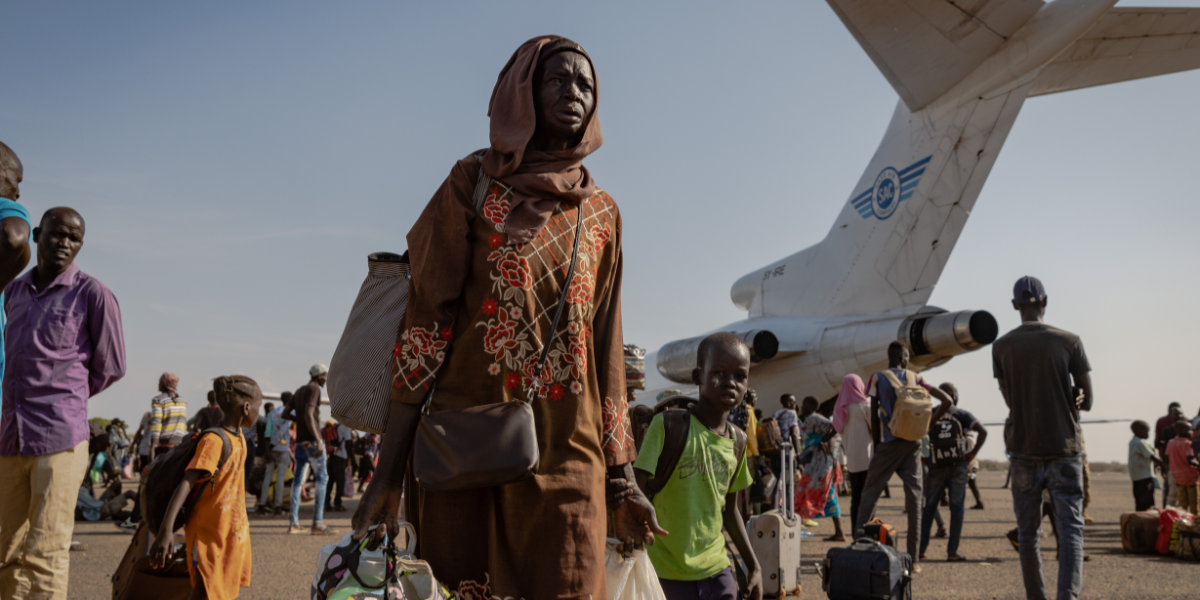
At the moment, the absence of security guarantees may discourage some citizens from traveling to their local areas to register or vote, particularly in conflict-affected communities. A CSO stated that “There is no assurance about security during the elections. Many people are planning to leave the country because they are afraid of what will happen. Because of insecurity in the villages, many people are not willing to travel to go and vote”. These fears are also reflected in wider public opinion. A 2025 PeaceRep/FES survey of 4,582 respondents found strong support for organizing the election, but around two-thirds of the respondents feared electoral violence and almost half feared that the elections could return the country to civil war.35
South Sudanese are not only questioning whether the elections can be held; many do not believe they will be safe. Insecurity will shape the electorate before any ballot is cast. Those who have been displaced may be reluctant or unable to travel, and those who are living in areas with active conflict may have fewer opportunities to register and vote. Under the current circumstances, the December 2026 general elections risk producing highly unequal participation opportunities.
Security alone will not be a determinant of meaningful participation in the December elections. Elections require an environment where constituents can listen to a variety of ideas, question leaders, access reliable information, and make informed decisions based on their information. South Sudan’s legal framework recognizes freedom of association, assembly and access to information for all citizens; the challenge has been the enforcement of the law in reality.36
In July 2026, NEC launched a nationwide voter education campaign. CSOs have also been involved in electoral consultations and trainings.37 These are important measures especially for a country like South Sudan that has not had a national election since its independence.38 A CSO shared that “Civic education is limited because of the shrinking space for civil society. Many communities are still confused about how the voting will work”. This is supported by a 2025 survey conducted by PeaceRep/FES, which found that civic space in South Sudan remains constrained and many respondents felt unsafe discussing the upcoming general elections, and respondents did not trust political actors.39 UNMISS and CSOs have highlighted that expanded civic space is essential for meaningful citizen participation in the upcoming general elections.40
There are also questions about inclusion. The NEC has stated that its civic education campaign is designed to reach women, youth, people with disabilities, IDPs, the elderly, and returnees. The electoral system also allows for a 35% women’s party list for the national assembly. However, formal inclusion rules do not solve the political and security barriers created by wide displacement and uneven access to credible information.41 A CSO commenting on the barriers noted that “There is still a question about the many refugees and IDPs who may not be able to vote”.
For refugees, IDPs and returnees, questions about how they will register, under which constituency, where they will vote and what security arrangements have been made to protect them will determine the credibility of the election. At the same time, there is a need to clarify electoral complaints procedures and the eligibility criteria for candidates as envisioned under the current law.
Under the current circumstances, it is important to differentiate Juba from the rest of the country. Information that is available to political elites in Juba, international organizations, and national CSOs cannot be assumed to be available to communities in insecure and remote areas. If many parts of the country remain insecure before the elections, citizens in these areas risk reaching election day without sufficient information about the electoral process, their choices, and how to exercise their rights. Citizens are being asked to understand the electoral process while the institutions that have held the country together since 2018 are changing. As such, clear public communication about the caretaker administration’s role will be essential to build confidence.
South Sudan faces a more difficult choice than simply holding or postponing the general elections scheduled for December 2026. South Sudanese demand for elections is strong, but there is also widespread fear about electoral violence. At this stage, it is important to ask what political framework can support either decision to move the country towards a legitimate democratic process rather than another civil war.42
The dissolution of the transitional government has further narrowed this dilemma as the country enters the final three months to the election under a caretaker administration, while many of the security concerns identified in this brief remain unresolved. The major question remains whether sufficient political safeguards are in place to make the elections legitimate and acceptable.
Given that the elections have been postponed twice already, the most constructive pathway for South Sudan at the moment is to retain the December date while urgently putting in place structures and negotiating minimum conditions to enable credible competition. This will entail an urgent electoral compact among the principal parties to the peace agreement, other political actors, and relevant civil society organizations, while also opening space for new political actors, protecting civic and political space, allocating adequate and predictable financing for the NEC, ensuring credible voter registration, and establishing impartial arrangements for electoral security.
The new inter-party dialogue launched on 24 September is an important opportunity to begin addressing some of these issues.43 However, it will only become useful if political actors use the space to reach consensus on campaigns, participation, electoral security and dispute resolution mechanisms.44 This will not require full completion of all R-ARCSS requirements before the election; it will require addressing the minimum political, legal, institutional and security requirements necessary for a free, credible and peaceful election.
Following the dissolution of the transitional government, the second scenario has become more plausible. Elections could now proceed administratively under the caretaker arrangement while significant political disagreements remain unresolved. This would mean ballots are printed and elections are held, but some opposition constituencies, displaced populations, or conflict-affected communities participate only partially or question the legitimacy of the process. This could produce elected officials without addressing the legitimacy crisis they were meant to address.
If actors believe the process is unfair even before elections are held, disputes over the results could quickly move from electoral institutions back into political and military confrontation.
Another extension carries risks as the process has already been postponed twice because critical tasks were incomplete. Another delay without clear obligations would deepen frustration in a transition process that has lasted longer than planned. It can also reinforce an existing perception that the transition has become a system that is preserving power for the current president.
Should December become unviable, any extension should be public, time-bound, and linked to measurable benchmarks which can include political dialogue, voter registration, electoral financing, logistical and operational security, a guaranteed civic space, and clear arrangements for displaced people, refugees, and returnees. The extension should be subjected to monitoring and reporting by the same institutions that have already been mandated under the R-ARCSS.
The dissolution of the transitional government and the establishment of the caretaker administration further complicate any postponement. If the elections are delayed beyond December 2026, there will need to be clarity on the legal authority, duration, and accountability of the caretaker administration.
With less than three months until the election, South Sudan cannot realistically meet all the outstanding provisions of the R-ARCSS before the election. The priority should be on the small number of provisions that are imperative to a free and fair electoral process.
The government needs to resume an inclusive and time-bound political dialogue on the electoral process. The recently launched inter-party dialogue is the perfect platform to build minimum agreement on the conditions for credible participation. The dialogue should address the current political impasse with SPLM-IO, inclusion of eligible political parties in the electoral process, treatment of political detainees, and the conditions under which political parties will accept the electoral outcomes.
Any other amendments to the R-ARCSS or the electoral framework should be done through inclusive consultations and should follow Article 8.4 and be limited to provisions crucial to enabling a free, fair, and credible election.45
The president and the caretaker administration should clarify the link between the new administration and the R-ARCSS, especially institutions like RJMEC and CTSAMVM that were established under the power-sharing agreement.
The government must guarantee political organization, assembly and campaigning in practice and not just in rhetoric and law. Electoral institutions deployed by NEC should act in fairness and remain neutral. The stalled security arrangements under the R-ARCSS should be immediately restored to prevent local conflicts from escalating along tribal and political lines.46
The government needs to provide NEC with predictable and adequate funds to operate independently. The independence of the electoral process is weakened when the institution mandated to conduct elections faces inadequate, delayed, or unpredictable financing.
The NEC should keep the public informed by regularly publishing a realistic operational calendar that covers updates on voter registration, political parties, candidates, campaign periods, polling stations, and security arrangements. The NEC should also provide a public explanation when there are delays. It should also clearly explain to the public which offices will be elected and which institutions will be responsible for dispute resolution.47
The NEC needs to treat issues of displacement and returnees with urgency. It needs to explain how displaced persons, returnees, and refugees will register and vote. Regular reporting on procurement, financing and the readiness of the State High Election Committees would help build confidence among the electorate that preparations are going well.
The AU and IGAD should treat the South Sudan election as a peace and political transition process and not only as an electoral management event. The AU High-Level Ad Hoc Committee on South Sudan (C5+) has reaffirmed the R-ARCSS as the foundation for lasting stability and called for sustained inclusive dialogue among the signatories.48 IGAD has similarly emphasized dialogue, confidence-building and adherence to the Agreement as conditions for peaceful, credible, inclusive and transparent elections.49
AU and IGAD now need to translate these positions into tangible engagements with the authorities that will result in electoral credibility. A coherent regional position is needed to reduce contradictory messaging, especially when all parties must make difficult political compromises.
International partners have been critical in supporting South Sudan’s transition. This technical and financial support should continue, especially in civic education, election administration, security preparedness, independent media, and youth networks. These actors and structures will be critical in the December general elections.
UN Human Rights and other human rights organizations should continue to monitor and report the situation. These institutions must maintain public reporting on violence, restrictions, and access for political and civic actors across the whole country.50
International actors should avoid legitimizing the elections simply because voting occurred, or supporting another extension without measurable reforms, accountability, and timelines.
International partners should also monitor the caretaker administration to ensure all political parties and actors have equal space to campaign and receive equal protection.
Despite the many challenges facing South Sudan as the country prepares for its first elections since independence, this is an opportunity that should not be underestimated. After many years of government through transitional arrangements, these elections provide an opportunity for the citizens to finally determine their political leadership through the ballot box. Repeated postponements have weakened public confidence in governance institutions, and this is an important opportunity to change that.
The dissolution of the transitional government has fundamentally changed the landscape for the upcoming general elections. The transitional government ended before many of the reforms were completed. The major concern now is whether the caretaker administration can oversee the elections in a way that political actors and citizens can regard as inclusive, impartial, and legitimate.
Given that an election date has been set, the country does not need to complete all the reforms promised under the 2018 peace agreement before the elections, nor does it need a perfect political and security environment before the elections can be conducted. Rather, efforts must ensure that all provisions that are necessary for a free and fair electoral process are implemented, and that there is sufficient political agreement around the rules governing the vote. The NEC must be supported with the resources it needs to conduct the elections, and the security institutions assigned to the electoral process must remain neutral throughout. The role of the R-ARCSS and its monitoring institutions must be clearly defined during the caretaker administration.
The success of the December 2026 general elections will not be measured by whether polling stations open or ballots are cast, but, most importantly, by what happens after the elections. If the electoral process gives citizens and political actors the confidence to access electoral results and have judicial means to address electoral disputes, then the elections will provide a credible route out of the prolonged transition. If not, then the country will end the transition calendar without completing the transition. The elections meant to consolidate peace will instead become a source of political instability.
1 RJMEC. Revitalised Agreement on the Resolution of the Conflict in the Republic of South Sudan (R-ARCSS), 2018. https://jmecsouthsudan.org/index.php/arcss-2015/igad-hlrf-agreement/108-revitalised-agreement-on-the-resolution-of-the-conflict-in-the-republic-of-south-sudan-r-arcss-2018
2 National Elections Commission of South Sudan. Frequently Asked Questions: mandate, legal framework, election date and institutional preparations. https://nec.gov.ss/frequently-asked-questions/
3 RJMEC. Briefing on the First Quarterly Report of 2026 to the RTNLA, 20 May 2026. https://jmecsouthsudan.org/index.php/jmec-statements/item/825-briefing-on-the-rjmec-first-quarterly-report-of-2026-1st-january-to-31st-march-2026-by-h-e-amb-maj-gen-aggrey-george-owinow-rtd-interim-chairperson-rjmec-to-the-rtnla-delivered-on-20th-may-2026-juba-south-sudan
4 Muorwel, James Kunhiak and Jan Pospisil. Now or Never? Political Conditions for Credible Elections in South Sudan. PeaceRep/Friedrich-Ebert-Stiftung, 2026. https://peacerep.org/publication/now-or-never-political-conditions-for-credible-elections-in-south-sudan/
5 Radio Tamazuj. Kiir dissolves government, appoints caretaker administration, 22 September 2026. https://www.radiotamazuj.org/en/news/article/kiir-dissolves-government-appoints-caretaker-administration
6 Reuters. South Sudan's Kiir dissolves government, clears hurdles to delayed election, 22 September 2026. https://www.reuters.com/world/africa/south-sudans-president-signs-election-law-changes-ahead-december-vote-2026-09-22/
7 RJMEC. Revitalised Agreement on the Resolution of the Conflict in the Republic of South Sudan (R-ARCSS), 2018. https://jmecsouthsudan.org/index.php/arcss-2015/igad-hlrf-agreement/108-revitalised-agreement-on-the-resolution-of-the-conflict-in-the-republic-of-south-sudan-r-arcss-2018
8 RJMEC. Reporting on the 2022 Roadmap and extension of the transitional period. https://www.jmecsouthsudan.org/index.php/jmec-statements/item/652-statement-by-h-e-amb-maj-gen-rtd-charles-tai-gituai-cbs-interim-chairperson-rjmec-to-the-25th-rjmec-monthly-meeting-thursday-15-december-2022-juba-south-sudan
9 RJMEC. Reporting on the September 2024 extension of the transition to February 2027 and elections to December 2026. https://www.jmecsouthsudan.org/index.php/jmec-statements
10 Article 8.2 establishes that the peace agreement holds legal precedence over the Transitional Constitution of South Sudan (2011) and all conflicting national legislation. This clause ensures the supremacy of the agreement by neutralizing contradictory domestic laws.
11 RJMEC. Briefing on the First Quarterly Report of 2026 to the RTNLA, 20 May 2026. https://jmecsouthsudan.org/index.php/jmec-statements/item/825-briefing-on-the-rjmec-first-quarterly-report-of-2026-1st-january-to-31st-march-2026-by-h-e-amb-maj-gen-aggrey-george-owinow-rtd-interim-chairperson-rjmec-to-the-rtnla-delivered-on-20th-may-2026-juba-south-sudan
12 Reuters. South Sudan's Kiir dissolves government, clears hurdles to delayed election, 22 September 2026. https://www.reuters.com/world/africa/south-sudans-president-signs-election-law-changes-ahead-december-vote-2026-09-22/
13 IGAD. Communiqué of the 74th Extraordinary Session of the IGAD Council of Ministers, 15 September 2026. https://igad.int/communique-of-the-74th-extraordinary-session-of-the-igad-council-of-ministers/
14 RJMEC. Briefing on the First Quarterly Report of 2026 to the RTNLA, 20 May 2026. https://jmecsouthsudan.org/index.php/jmec-statements/item/825-briefing-on-the-rjmec-first-quarterly-report-of-2026-1st-january-to-31st-march-2026-by-h-e-amb-maj-gen-aggrey-george-owinow-rtd-interim-chairperson-rjmec-to-the-rtnla-delivered-on-20th-may-2026-juba-south-sudan
15 RJMEC. Briefing on the First Quarterly Report of 2026 to the RTNLA, 20 May 2026. https://jmecsouthsudan.org/index.php/jmec-statements/item/825-briefing-on-the-rjmec-first-quarterly-report-of-2026-1st-january-to-31st-march-2026-by-h-e-amb-maj-gen-aggrey-george-owinow-rtd-interim-chairperson-rjmec-to-the-rtnla-delivered-on-20th-may-2026-juba-south-sudan
16 UN Human Rights Council. Report of the Commission on Human Rights in South Sudan, A/HRC/61/25, 11 March 2026. https://docs.un.org/en/A/HRC/61/25
17 National Elections Commission of South Sudan. Frequently Asked Questions: mandate, legal framework, election date and institutional preparations. https://nec.gov.ss/frequently-asked-questions/
18 National Elections Commission of South Sudan. Frequently Asked Questions: mandate, legal framework, election date and institutional preparations. https://nec.gov.ss/frequently-asked-questions/
19 National Elections Commission of South Sudan. Constitution and geographical constituency resources. https://nec.gov.ss/download-category/constitution/
20 National Elections Commission of South Sudan. Electoral stakeholder consultation on regulations, civic education, timeline, legal clarity, funding and election security. https://nec.gov.ss/national-elections-commission-engages-electoral-stakeholders-in-consultative-meeting-to-advance-electoral-process/
21 Muorwel, James Kunhiak and Jan Pospisil. Now or Never? Political Conditions for Credible Elections in South Sudan. PeaceRep/Friedrich-Ebert-Stiftung, 2026. https://peacerep.org/publication/now-or-never-political-conditions-for-credible-elections-in-south-sudan/
22 National Elections Commission of South Sudan. Electoral stakeholder consultation on regulations, civic education, timeline, legal clarity, funding and election security. https://nec.gov.ss/national-elections-commission-engages-electoral-stakeholders-in-consultative-meeting-to-advance-electoral-process/
23 UN Human Rights Council. Report of the Commission on Human Rights in South Sudan, A/HRC/61/25, 11 March 2026. https://docs.un.org/en/A/HRC/61/25
24 Machar defence battles prosecution over how accused will testify. https://www.radiotamazuj.org/en/news/article/machar-defence-battles-prosecution-over-how-accused-will-testify
25 Recent reporting on the continuing Machar trial and house arrest, including court proceedings in July-August 2026. https://www.radiotamazuj.org/en/news/article/machar-trial-adjourned-after-judge-falls-ill-2
26 RJMEC. Briefing on the First Quarterly Report of 2026 to the RTNLA, 20 May 2026. https://jmecsouthsudan.org/index.php/jmec-statements/item/825-briefing-on-the-rjmec-first-quarterly-report-of-2026-1st-january-to-31st-march-2026-by-h-e-amb-maj-gen-aggrey-george-owinow-rtd-interim-chairperson-rjmec-to-the-rtnla-delivered-on-20th-may-2026-juba-south-sudan
27 Radio Tamazuj. Kiir dissolves government, appoints caretaker administration, 22 September 2026.
28 National Elections Commission of South Sudan. Frequently Asked Questions: mandate, legal framework, election date and institutional preparations. https://nec.gov.ss/frequently-asked-questions/
29 Radio Tamazuj. Kon rejects Kiir’s caretaker appointments, calls for consultation, 23 September 2026.
30 Radio Tamazuj. EU warns caretaker government against overreach, 22 September 2026.
31 RJMEC. Briefing on the First Quarterly Report of 2026 to the RTNLA, 20 May 2026. https://jmecsouthsudan.org/index.php/jmec-statements/item/825-briefing-on-the-rjmec-first-quarterly-report-of-2026-1st-january-to-31st-march-2026-by-h-e-amb-maj-gen-aggrey-george-owinow-rtd-interim-chairperson-rjmec-to-the-rtnla-delivered-on-20th-may-2026-juba-south-sudan
32 UNMISS. Sharp rise in civilian deaths recorded in UNMISS report, 30 June 2026. https://unmiss.unmissions.org/en/press-releases/press-release-sharp-rise-in-civilian-deaths-recorded-in-unmiss-report
33 OHCHR Special Procedures. Joint communication SSD 1/2026 concerning large-scale displacement and alleged violations in Jonglei, Lakes, Upper Nile and Central Equatoria. https://spcommreports.ohchr.org/TmSearch/Mandates?m=272
34 National Elections Commission of South Sudan. Frequently Asked Questions: mandate, legal framework, election date and institutional preparations. https://nec.gov.ss/frequently-asked-questions/
35 Deng, David; Sophia Dawkins; Christopher Oringa; and Jan Pospisil. Trends in Civic Space and Elections in South Sudan: Findings from the 2025 Public Perceptions of Peace Survey. PeaceRep/FES, 2025. https://peacerep.org/publication/trends-in-civic-space-and-elections-in-south-sudan/
36 National Elections Commission of South Sudan. Frequently Asked Questions: mandate, legal framework, election date and institutional preparations. https://nec.gov.ss/frequently-asked-questions/
37 National Elections Commission of South Sudan. Frequently Asked Questions: mandate, legal framework, election date and institutional preparations. https://nec.gov.ss/frequently-asked-questions/
38 National Elections Commission of South Sudan. Civic and voter education resources and 2026 campaign materials. https://nec.gov.ss/
39 Deng, David; Sophia Dawkins; Christopher Oringa; and Jan Pospisil. Trends in Civic Space and Elections in South Sudan: Findings from the 2025 Public Perceptions of Peace Survey. PeaceRep/FES, 2025. https://peacerep.org/publication/trends-in-civic-space-and-elections-in-south-sudan/
40 UNMISS. Civil society, faith-based groups and parliamentarians push for expanded civic space, 2026. https://unmiss.unmissions.org/en/news/civil-society-faith-based-groups-and-parliamentarians-push-for-expanded-civic-space
41 National Elections Commission of South Sudan. Frequently Asked Questions: mandate, legal framework, election date and institutional preparations. https://nec.gov.ss/frequently-asked-questions/
42 Deng, David; Sophia Dawkins; Christopher Oringa; and Jan Pospisil. Trends in Civic Space and Elections in South Sudan: Findings from the 2025 Public Perceptions of Peace Survey. PeaceRep/FES, 2025. https://peacerep.org/publication/trends-in-civic-space-and-elections-in-south-sudan/
43 Reuters. South Sudan launch of the Inter-Party Political Dialogue in Juba. https://www.reutersconnect.com/item/south-sudan-launch-of-the-inter-party-political-dialogue-in-juba/dGFnOnJldXRlcnMuY29tLDIwMjY6bmV3c21sX1JDMk1QTkFTNFlRNQ
44 IGAD. Communiqué of the 74th Extraordinary Session of the IGAD Council of Ministers, 15 September 2026.
45 RJMEC. Briefing on the First Quarterly Report of 2026 to the RTNLA, 20 May 2026. https://jmecsouthsudan.org/index.php/jmec-statements/item/825-briefing-on-the-rjmec-first-quarterly-report-of-2026-1st-january-to-31st-march-2026-by-h-e-amb-maj-gen-aggrey-george-owinow-rtd-interim-chairperson-rjmec-to-the-rtnla-delivered-on-20th-may-2026-juba-south-sudan
46 RJMEC. Briefing on the First Quarterly Report of 2026 to the RTNLA, 20 May 2026. https://jmecsouthsudan.org/index.php/jmec-statements/item/825-briefing-on-the-rjmec-first-quarterly-report-of-2026-1st-january-to-31st-march-2026-by-h-e-amb-maj-gen-aggrey-george-owinow-rtd-interim-chairperson-rjmec-to-the-rtnla-delivered-on-20th-may-2026-juba-south-sudan
47 National Elections Commission of South Sudan. Frequently Asked Questions: mandate, legal framework, election date and institutional preparations. https://nec.gov.ss/frequently-asked-questions/
48 African Union. AUC Chairperson engagement with the AU High-Level Ad Hoc Committee on South Sudan (C5+), 16 February 2026. https://static.au.int/sw/node/46010
49 IGAD. Reaffirms support for South Sudan’s peace process, democratic transition and election preparations, 17 June 2026. https://igad.int/igad-reaffirms-support-for-south-sudans-peace-process-democratic-transition-and-election-preparations-during-high-level-meeting-with-president-salva-kiir/
50 UN Human Rights Council. Report of the Commission on Human Rights in South Sudan, A/HRC/61/25, 11 March 2026. https://docs.un.org/en/A/HRC/61/25
GGI Briefing 5/2026
Acho Gerald Anji is a GGI Peace and Security Fellow. He currently serves as Sudan Country Manager at Concordis International, and as a PhD researcher at Leiden University in the Netherlands. He brings more than a decade of experience in peacebuilding, security, and development across the Horn of Africa and Great Lakes regions, with a strong focus on the Humanitarian–Development–Peace nexus.
Is South Sudan Ready to Vote? Assessing the Prospects for a Credible Election in December 2026
is-south-sudan-ready-to-vote-assessing-the-prospects-for-a-credible-election-in-december-2026
Briefing
Peace and Security
September 28, 2026
Justice-Ready by Design: What the UN’s Work with Victims of Terrorism Reveals About Digital Public Infrastructure
justice-ready-by-design-what-the-uns-work-with-victims-of-terrorism-reveals-about-digital-public-infrastructure
Commentary
AI Governance
September 23, 2026

A Start, Not an End: Reflections on the Peace Operations Review Report
a-start-not-an-end-reflections-on-the-peace-operations-review-report
Analysis
Peace and Security
September 21, 2026
European Nuclear Arms and Arms Control in an Age of Uncertainty
european-nuclear-arms-and-arms-control-in-an-age-of-uncertainty
Analysis
Peace and Security
September 10, 2026
A Blueprint for the Global Governance of Autonomous Weapon Systems
a-blueprint-for-the-global-governance-of-autonomous-weapon-systems
Report
Peace and Security
August 28, 2026
AI, Sustainable Development and the Future of Education: A Governance Imperative
ai-sustainable-development-and-the-future-of-education-a-governance-imperative
Commentary
Global Education
August 17, 2026
Financing Syria's Recovery: The EU and a Fragile Economic Opening
financing-syrias-recovery-the-eu-and-a-fragile-economic-opening
Briefing
Global Economy
August 12, 2026
European Defence: The European Union Framework as a Dead End
european-defence-the-european-union-framework-as-a-dead-end
Briefing
Peace and Security
July 22, 2026
The New Development Bank Joins the Shift Towards Nuclear Energy Financing
the-new-development-bank-joins-the-shift-towards-nuclear-energy-financing
Commentary
Global Economy
July 13, 2026
.png)
An Issue Area Approach to Defending Global Governance
an-issue-area-approach-to-defending-global-governance
Briefing
Peace and Security
July 2, 2026

Europe’s Defence Supply Chains Need Africa and the Global South
europes-defence-supply-chains-need-africa-and-the-global-south
Commentary
Global Economy
June 12, 2026

Retrenchment as Policy Failure: Aid Cuts, the Post-UNITAMS Vacuum, and Sudan's Civilian Crisis
retrenchment-as-policy-failure-aid-cuts-the-post-unitams-vacuum-and-sudans-civilian-crisis
Briefing
Peace and Security
May 28, 2026
The Illusion of AI Sovereignty: Mapping the Five-Layer AI Stack
the-illusion-of-ai-sovereignty-mapping-the-five-layer-ai-stack
Commentary
AI Governance
May 15, 2026

Towards a Science for Diplomacy? The U7+ Alliance and the Strategic Repositioning of Universities in Global Governance
towards-a-science-for-diplomacy-the-u-7-alliance-and-the-strategic-repositioning-of-universities-in-global-governance
Commentary
Global Education
April 27, 2026
The Capability Overhang: Cognition and Labor in the Age of AI
the-capability-overhang-cognition-and-labor-in-the-age-of-ai
Commentary
AI Governance
April 9, 2026
.png)
The UN80 Initiative as a Productive Failure: Between Geopolitical Disruptions and Organizational Path Dependency
the-un80-initiative-as-a-productive-failure-between-geopolitical-disruptions-and-organizational-path-dependency
Analysis
Peace and Security
March 31, 2026

Quo Vadis EU-UN Relations in Peace and Security? Evolution, Challenges and Adaptation
quo-vadis-eu-un-relations-in-peace-and-security-evolution-challenges-and-adaptation
Briefing
Peace and Security
February 27, 2026
Higher Education at a Crossroads: Why Europe’s Universities Must Lead, Not Merely Comply
higher-education-at-a-crossroads-why-europes-universities-must-lead-not-merely-comply
Commentary
Global Education
February 23, 2026

What Comes After the US-Israel Strikes on the Islamic Republic?
what-comes-after-the-us-israel-strikes-on-the-islamic-republic
Commentary
Peace and Security
December 19, 2025

Do You Know What’s in Your Skies? Emerging Challenges for Civil Aviation Governance
do-you-know-whats-in-your-skies-emerging-challenges-for-civil-aviation-governance
Commentary
AI Governance
December 18, 2025
Knowledge creation in times of scarce resources in higher education
knowledge-creation-in-times-of-scarce-resources-in-higher-education
Commentary
Global Education
November 10, 2025

Justice-Ready Digital Public Infrastructure: Building a Third Layer of Trust for Democratic Resilience
justice-ready-digital-public-infrastructure-building-a-third-layer-of-trust-for-democratic-resilience
Briefing
AI Governance
October 23, 2025

Is a Greener Future for AI Possible?
is-a-greener-future-for-ai-possible
Commentary
AI Governance
October 20, 2025
Silencing Dissent: How the Tech Backlash Threatens Transitional Justice
silencing-dissent-how-the-tech-backlash-threatens-transitional-justice
Commentary
AI Governance
October 2, 2025

Holding NATO Together and Keeping the US Engaged: Strategic Implications of the Hague Summit
holding-nato-together-and-keeping-the-us-engaged-strategic-implications-of-the-hague-summit
Analysis
Peace and Security
September 9, 2025

Reforming the UN during a financial crisis: a foreseeable failure to align money, mandates, and majorities?
reforming-the-un-during-a-financial-crisis-a-foreseeable-failure-to-align-money-mandates-and-majorities
Briefing
Peace and Security
July 9, 2025

How do we measure the quality of education?
how-do-we-measure-the-quality-of-education
Commentary
Global Education
April 28, 2025

Bound to Fail? The Limits of Diplomacy in the Russia–Ukraine War and the Future of European Security
bound-to-fail-the-limits-of-diplomacy-in-the-russia-ukraine-war-and-the-future-of-european-security
Commentary
Peace and Security
April 8, 2025

A major shift in global higher education is underway: why collective leadership and governance are more important than ever
a-major-shift-in-global-higher-education-is-underway-why-collective-leadership-and-governance-are-more-important-than-ever
Commentary
Global Education
March 26, 2025

AI's Fast-Forward Button: Can We Harness Innovation Without Sacrificing Safety?
ais-fast-forward-button-can-we-harness-innovation-without-sacrificing-safety
Commentary
AI Governance
March 10, 2025
Parliaments in the EU enlargement process: Strengthening capacities of accession country parliaments under the evolving enlargement methodology
parliaments-in-the-eu-enlargement-process-strengthening-capacities-of-accession-country-parliaments-under-the-evolving-enlargement-methodology
Report
Democracy and Human Rights
January 30, 2025
%20(1200%20x%20600%20px)%20(1200%20x%20400%20px).png)
Synthetic Biology and the Future of Global Environmental Governance
synthetic-biology-and-the-future-of-global-environmental-governance
Analysis
Global Environmental Governance
January 28, 2025

Towards a Global Agency for Governing Artificial General Intelligence: Challenges and Perspectives
towards-a-global-agency-for-governing-artificial-general-intelligence-challenges-and-perspectives
Report
AI Governance
January 14, 2025

Normalizing Russia can become Trump’s biggest mistake, but it’s not too late to prevent it
normalizing-russia-can-become-trumps-biggest-mistake-but-its-not-too-late-to-prevent-it
Commentary
Peace and Security
January 13, 2025

Stabilizing Europe’s Security Architecture after the Russo-Ukraine War? The Future of Conventional Arms Control in Europe
stabilizing-europes-security-architecture-after-the-russo-ukraine-war-the-future-of-conventional-arms-control-in-europe
Briefing
Peace and Security
November 20, 2024

INTERPOL: Challenges and Opportunities for the New Secretary General
interpol-challenges-and-opportunities-for-the-new-secretary-general
Commentary
Peace and Security
November 7, 2024

A Fork in the Road? The Kazan Summit of the BRICS
a-fork-in-the-road-the-kazan-summit-of-the-brics
Briefing
Peace and Security
October 30, 2024

UN Summit of the Future and Development: The Way Forward
un-summit-of-the-future-and-development-the-way-forward
Briefing
AI Governance
October 24, 2024
ECOWAS after the ‘Triple Withdrawal’ and the creation of the Alliance of Sahel States
ecowas-after-the-triple-withdrawal-and-the-creation-of-the-alliance-of-sahel-states-challenges-and-ways-ahead-for-regional-security-governance
Analysis
Peace and Security
October 7, 2024
Rushing to Peace, Racing to War: The Challenge of a Just Settlement
rushing-to-peace-racing-to-war-the-challenge-of-a-just-settlement
Commentary
Peace and Security
September 30, 2024
UN Summit of the Future: A Critical Moment for Global AI Governance
un-summit-of-the-future-a-critical-moment-for-global-ai-governance
Commentary
AI Governance
September 20, 2024

Shattered Security: Gender And Coups In Guinea, Mali, And Burkina Faso
shattered-security-gender-and-coups-in-guinea-mali-and-burkina-faso
Briefing
Peace and Security
June 26, 2024
Before the Peace Summit: Testing Multilateralism and Ukrainian Diplomacy
before-the-peace-summit-testing-multilateralism-and-ukrainian-diplomacy
Commentary
Peace and Security
June 14, 2024
The On-Going Quest for Teaching Excellence
the-on-going-quest-for-teaching-excellence
Commentary
Global Education
June 11, 2024

Deepening EU-Japan-US Cooperation on Critical and Emerging Technologies
deepening-eu-japan-us-cooperation-on-critical-and-emerging-technologies
Commentary
AI Governance
May 7, 2024
UNRWA’s Funding Freeze was Unjustified and Undermined Good Governance
unrwas-funding-freeze-was-unjustified-and-undermined-good-governance
Briefing
Democracy and Human Rights
April 25, 2024

Israel’s Non-implementation of the ICJ’s Provisional Measures: International Law Must Be Upheld
israels-non-implementation-of-the-icjs-provisional-measures-international-law-must-be-upheld
Briefing
Democracy and Human Rights
April 2, 2024

The EU AI Act: two steps forward, one step back
the-eu-ai-act-two-steps-forward-one-step-back
Briefing
AI Governance
March 19, 2024

The Council of Europe’s draft AI Treaty: balancing national security, innovation and human rights?
the-council-of-europes-draft-ai-treaty-balancing-national-security-innovation-and-human-rights
Commentary
AI Governance
March 18, 2024
The Ukrainian Peace Formula: content, evolution and diplomatic outreach
the-ukrainian-peace-formula-content-evolution-and-diplomatic-outreach
Analysis
Peace and Security
February 26, 2024
What developments in AI tell us about the future of governance models
what-developments-in-ai-tell-us-about-the-future-of-governance-models
Commentary
AI Governance
February 21, 2024

Whither the Global Governance of Protecting Civilians? An Initial Assessment of the ICJ’s Decision on South Africa v. Israel of 26 January 2024
whither-the-global-governance-of-protecting-civilians-an-initial-assessment-of-the-icjs-decision-on-south-africa-v-israel-of-26-january-2024
Analysis
Democracy and Human Rights
February 14, 2024
How Ukraine uses AI to fight Russian information operations
how-ukraine-uses-ai-to-fight-russian-information-operations
Commentary
AI Governance
February 12, 2024

Got trust? Global governance of emerging technologies
got-trust-global-governance-of-emerging-technologies
Commentary
AI Governance
November 28, 2023

Last minute national objections to the EU’s AI Act are a mistake. Here’s why
rolling-back-the-ai-act-is-a-mistake-heres-why
Commentary
AI Governance
November 27, 2023

Contributions of Latin America and the Caribbean to UN Peace Operations and Recommendations to Increase this Participation
new-ggi-advice-report-latin-american-and-caribbean-countries-contributions-to-un-peacekeeping
Report
Peace and Security
October 12, 2023
Armed Conflict in Nagorno-Karabakh: Crisis, Exodus, and Ethnic Cleansing
armed-conflict-in-nagorno-karabakh-crisis-exodus-and-ethnic-cleansing
Briefing
Peace and Security
October 9, 2023
Thinking of Eloho – One Year On
thinking-of-eloho-one-year-on
Commentary
Peace and Security
August 12, 2023
The Strategic Compass and the EU's Security & Defence Partnerships
the-strategic-compass-implementing-the-partnership-dimension-in-the-area-of-security-and-defence
Report
Peace and Security
July 23, 2023
Franco-German Perspectives: Europe's Moment of Geopolitics
franco-german-perspectives-europes-moment-of-geopolitics
Commentary
Peace and Security
June 2, 2023

A Comprehensive Mapping of National Higher Education Teaching Qualification schemes, Requirements and Provisions for the Promotion and Reward of Teaching Excellence
a-comprehensive-mapping-of-national-higher-education-teaching-qualification-schemes-requirements-and-provisions-for-the-promotion-and-reward-of-teaching-excellence
Report
Global Education
June 1, 2023

Stefaan de Rynck 'Inside the deal: How the EU got Brexit Done'
stefaan-de-ryncks-inside-the-deal-how-the-eu-got-brexit-done
Commentary
Global Education
April 5, 2023

NATO Allies and the Protection of Civilians
nato-allies-and-the-protection-of-civilians
Analysis
Peace and Security
January 11, 2023
Why Jettison Erasmus? The negative consequences for the UK of walking away
why-jettison-erasmus
Commentary
Global Education
January 1, 2021

Doing less with more? The difficult return of Western troop contributing countries to UN Peacekeeping
doing-less-with-more
Analysis
Peace and Security
November 2, 2020
The European Union's Role in International Economic Fora – Paper 4: The IMF
the-european-unions-role-in-international-economic-fora-paper-4-the-imf
Report
Global Economy
September 1, 2015
Civil Society Reforms in Uzbekistan: More than Government Chicanery?
civil-society-reforms-in-uzbekistan-more-than-government-chicanery
Briefing
Peace and Security
January 1, 2014
Assessing the EU’s Joint Communication on the Comprehensive Approach: Implications for EU Crisis Response and Conflict Prevention
assessing-the-eus-joint-communication-on-the-comprehensive-approach
Briefing
Peace and Security
December 15, 2013
The EU Foreign Policy of My Dreams: Ten Wishes
the-eu-foreign-policy-of-my-dreams-ten-wishes
Views from Practice
Peace and Security
December 12, 2013

The Middle East as weapons of mass destruction free zone: A proposal to overcome the deadlock
the-middle-east-as-weapons-of-mass-destruction-free-zone-a-proposal-to-overcome-the-deadlock
Views from Practice
Peace and Security
October 15, 2013
From a Militarized to a Humanized Responsibility to Protect
from-a-militarized-to-a-humanized-responsibility-to-protect-integrating-the-red-cross-and-red-crescent-into-rtop-to-respond-to-natural-disasters-and-global-climate-change
Analysis
Global Environmental Governance
June 1, 2013
Leading the Peacebuilding Commission: An Institutional History in the Making
leading-the-peacebuilding-commission-an-institutional-history-in-the-making
Views from Practice
Peace and Security
March 1, 2013
Anticipating the “Final” Arms Trade Treaty Conference: Eight Concrete Proposals
anticipating-the-final-arms-trade-treaty-conference-eight-concrete-proposals
Analysis
Peace and Security
February 1, 2013
Report for the Inquiry into the European External Action Service – EU sub-committee on External Affairs of the House Of Lords
report-for-the-inquiry-into-the-european-external-action-service---eu-sub-committee-on-external-affairs-of-the-house-of-lords
Briefing
Peace and Security
December 1, 2012
Government and the Process of Governance in Africa
government-and-the-process-of-governance-in-africa
Analysis
Peace and Security
November 1, 2012
The Responsibility to Protect and the Responsibility while Protecting: Friends or Foes?
the-responsibility-to-protect-and-the-responsibility-while-protecting-friends-or-foes
Analysis
Democracy and Human Rights
September 15, 2012

Montenegro’s Accession To The EU: Taking Stock And Suggesting Areas For Progress
montenegros-accession-to-the-eu-taking-stock-and-suggesting-areas-for-progress
Briefing
Democracy and Human Rights
August 1, 2012

Electing Freedom? Key Challenges For Libya After The 7 July 2012 Election
electing-freedom-key-challenges-for-libya-after-the-7-july-2012-election
Briefing
Peace and Security
August 1, 2012

The Somali Crisis and the EU: Moving Onshore and Committing to Somalia
the-somali-crisis-and-the-eu-moving-onshore-and-committing-to-somalia
Analysis
Peace and Security
July 1, 2012
United Nations - European Union Cooperation in the Field of Peacekeeping: Challenges and Prospects
united-nations-european-union-cooperation-in-the-field-of-peacekeeping-challenges-and-prospects
Analysis
Peace and Security
June 1, 2012
Widening The Huntress’s Reach: Legal And Strategic Aspects Of A New Atalanta Mandate
legal-and-strategic-aspects-of-a-new-atalanta-mandate
Briefing
Democracy and Human Rights
April 15, 2012

The Biological Weapons Convention, Bioterrorism And The Life Sciences
the-biological-weapons-convention-bioterrorism-and-the-life-sciences
Briefing
Peace and Security
April 1, 2012

A Democratic Justification for Military and Non-military Humanitarian Intervention
a-democratic-justification-for-military-and-non-military-humanitarian-interventions
Analysis
Democracy and Human Rights
April 1, 2012

Climate Change and Security: Adapting the Discussion to the Evidence
climate-change-and-security
Briefing
Global Environmental Governance
March 15, 2012

The United Nations Entity for Gender Equality and the Empowerment of Women (UN Women)
the-united-nations-entity-for-gender-equality-and-the-empowerment-of-women-un-women
Backgrounder
Peace and Security
September 1, 2011

The International Criminal Court and Kenya’s Post-election Violence
the-international-criminal-court-and-kenyas-post-election-violence
Analysis
Democracy and Human Rights
July 15, 2011

The United Nations Peacebuilding Architecture: Background Note
the-united-nations-peacebuilding-architecture-background-note
Briefing
Peace and Security
March 1, 2011
European Civilian Crisis Management Capacities: Bridging The Resources Gap?
european-civilian-crisis-management-capacities-bridging-the-resources-gap
Briefing
Peace and Security
January 15, 2011
The Changing Constellation of Power and Resistance in the Global Debate over Agrofuels
the-changing-constellation-of-power-and-resistance-in-the-global-debate-over-agrofuels
Analysis
Global Environmental Governance
January 1, 2011